

How to Style a Living Room with Two Focal Points

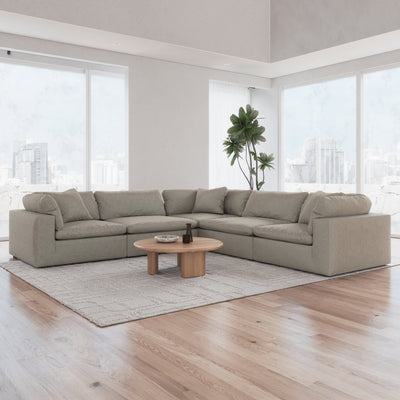

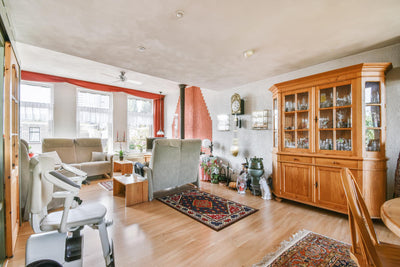
Most design advice assumes one focal point per room. One TV, one fireplace, one view. In reality, many living rooms have two: a fireplace and a TV, a bay window and a fireplace, or two different architectural features competing for attention. Ignore the conflict and the room feels torn. Handle it right and the room feels richer and more functional than a single-focal room.
This guide lays out the five proven strategies for styling a room with two focal points, plus how to decide when to pick one and when to embrace both.
The Two-Focal Point Problem
A focal point is where the eye lands when you walk into the room. Two focal points mean the eye does not know where to rest. Furniture placement that prioritizes one leaves the other feeling abandoned. The result is a room that looks unfinished.
The fix is not to eliminate a focal point but to arrange the room so each serves a purpose without competing.
First: Decide If Both Deserve to Stay
Before laying out furniture, ask:
- Is the TV the primary daily-use focal point? (It usually is.)
- Is the fireplace used or decorative?
- Does the view through the window matter in daytime?
- Can one focal point be minimized (TV inside a cabinet, fireplace painted to blend)?
If one focal point is actively underused, consider visually minimizing it so the other can dominate. The simplest two-focal room is one where one focal has been deliberately softened.
Strategy 1: Primary and Secondary Hierarchy
Accept that one focal point will be primary and one will be secondary. Arrange the main sofa facing the primary. Arrange secondary seating (accent chairs, a loveseat) facing or angled toward the secondary.
This creates two seating zones within one room. The main zone handles most daily activity. The secondary zone is used during fires, reading, or gazing at a view. Both focal points get served without fighting each other.
Strategy 2: Split the Room into Two Zones
If the room is large enough (14 x 16 feet or bigger), physically split it into two distinct zones. A TV zone at one end with a sofa and maybe a chair. A fireplace zone at the other end with two chairs and a small table. A console table or half-wall divider between them.
This works especially well in great rooms or open-plan spaces where you have the floor space to support two zones. Each focal point gets its own dedicated seating.
Strategy 3: Align Both on a Single Wall
If the fireplace and TV are on the same wall (fireplace plus TV mounted above it, or fireplace and TV flanking each other), the two-focal problem disappears. Both are visible from a single sofa. The room has one functional focal wall.
This is the most common approach in modern homes and the cleanest layout from a furniture-placement perspective.
Strategy 4: Use Furniture as a Pivot
A swivel chair or a floated ottoman lets sitters pivot between the two focal points. One person can watch TV while another faces the fireplace. The furniture itself does the work of switching focus.
Swivel accent chairs, rotating lounge pieces, and ottomans used as second seating all enable this trick. Works well in modest-size rooms where zoning is not possible.
Strategy 5: TV Inside a Cabinet Near the Fireplace
Hide the TV inside a cabinet or behind a sliding panel near the fireplace. When closed, the fireplace is the sole focal point. When open, the TV emerges for use. The two focal points become one visible at a time.
Requires custom cabinetry or a purpose-built media console. Worth the cost in formal living rooms where the fireplace is the primary aesthetic feature.
Seating Angles for Two-Focal Rooms
When seating must serve two focal points, angle rather than face:
- Sofa at 45 degrees to each focal point: compromise position, workable for both
- Main sofa facing primary focal, swivel chair facing secondary: clean solution for multi-use rooms
- L-sectional with one leg pointing at each focal: natural angling for two focals
- Two loveseats facing the coffee table, perpendicular to both focals: pivot-friendly, no forced angle
For more on placement around fireplaces specifically, see our furniture around a corner fireplace guide.
Common Mistakes
- Placing sofa facing one focal and ignoring the other. The ignored focal becomes visual clutter.
- Cramming two full seating zones in a room that cannot support them. Zones need 120+ square feet each.
- Using matching seating for both zones. Vary the style so each zone reads distinctly.
- Adding a third focal point with bold art on a third wall. Three focals is too many.
- Ignoring traffic flow. Splitting a room into zones still requires walking paths.
For broader styling principles, see our small living room layout ideas guide. Sectional shoppers should confirm orientation via our sectional orientation guide. Curved sofas can soften two-focal rooms; see best curved sofas.
Modular Cloud Couches for Dual-Focal Rooms
Sofatica modular cloud couches reconfigure to serve single-focal or dual-focal layouts. Add or remove modules as your room's focal priorities change.
Shop Modular Cloud Couches


